.:: Step Down Transformer ::.
Step Down Transformer, Not Only Turns Ratio
LAST MODIFIED: 05-12-2026 | PAGE HITS: 273
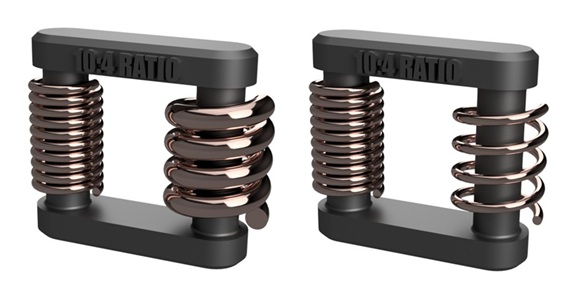
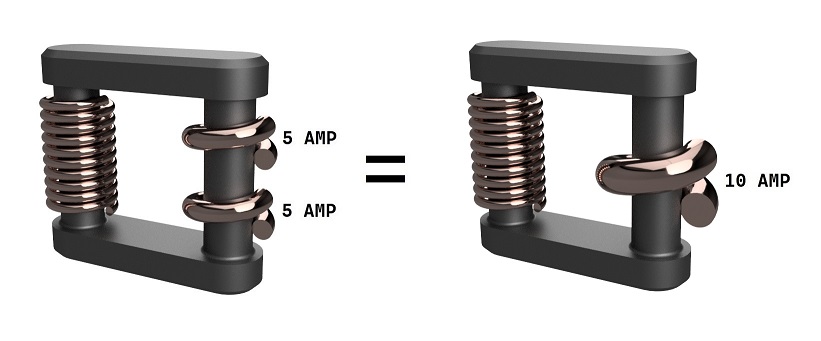
We are taught that a transformer can step up and step down both AC voltage and AC current. If you have 10 windings of wire on the primary side of the transformer and 5 windings on the secondary side of the transformer, and apply 100 volts AC to the primary, the secondary will put out 50 volts AC, but with twice the maximum current. The reason a transformer can step up voltage is because each secondary winding connects to its neighboring winding in series. This is similar to connecting batteries in series with each other. If the secondary coil has less turns than the primary then it is supposed to step down voltage, but increase maximum output current. The battery analogy used before to explain voltage step up action also applies to stepping up current as well. If your secondary winding is one turn of thin wire, then it will put out a small amount of current when connected to a load; if you increase the wire diameter however, it is the same thing as putting two coils in parallel, giving you more current capacity. You can even try a simple experiment to test this theory, by putting a very high gauge (thin) wire around the step down secondary and shorting it out. Chances are the wire won’t melt as you would expect from simple transformer math, using only turns ratios to calculate output current.